
AISI 4130 Steel Ultimate Guide For Buyers and Engineers
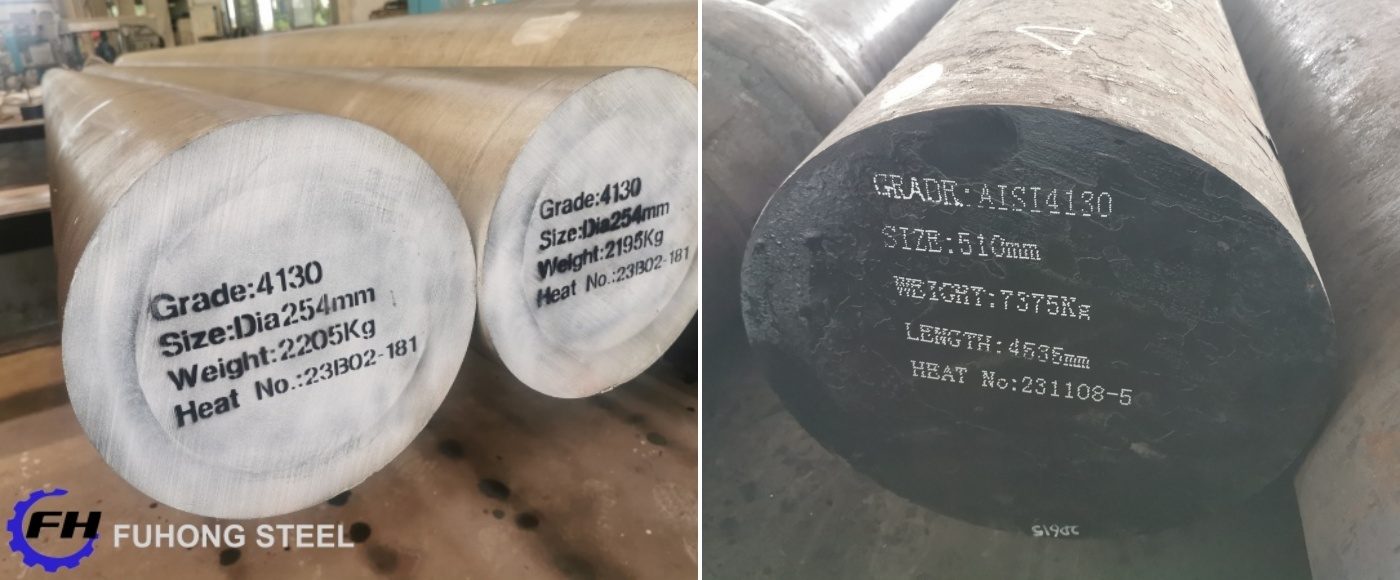
AISI 4130 is the weldable workhorse of chromium-molybdenum alloy steels — prized for its excellent balance of strength, toughness, and weldability at a competitive price point. Whether you’re specifying structural tubing, aircraft components, hydraulic cylinders, or automotive chassis parts, this guide covers everything you need to know to make the right purchasing decision.
Why Choose 4130? Six Core Advantages For Buyers
- Excellent strength-to-weight ratio — lighter than carbon steel for equivalent load capacity
- Superior weldability vs. higher-carbon Cr-Mo grades (4140, 4340)
- Good through-hardening for small-to-medium sections
- Reliable fatigue resistance for dynamic load applications
- Cost-effective middle ground between mild steel and high-alloy grades
- Readily available in bar, tube, sheet, and plate forms
4130 Steel Heat Treatment Basics
Normalizing
870–900°C
Spheroidize Annealing
749°C → 666°C
Tempering
400–570°C
Full Annealing
830–850°C
Quenching
870–890°C
75K Tempering
595–650°C
4130 Steel Mechanical Properties -75 KSI QT Condition
| Typical Mechanical Properties — Quenched & Tempered |
||||
| Property | Symbol | Value | Unit | Condition |
| Tensile Strength | Rₘ | 620–690 MPa | MPa | QT |
| Yield Strength | Rₚ₀.₂ | ≥ 517 | MPa | QT |
| Elongation | A₅ | 18–22% | % | QT |
| Reduction of Area | Z | 45–55% | % | QT |
| Hardness | HRC | 18-22 | HRC | QT |
“75K” refers to 75,000 psi (517 MPa) minimum yield strength, a common certified condition for 4130 steel bar and tubing. This is achieved through quenching and tempering (Q&T). Actual properties may vary by section size, heat treatment practice, and product form (bar vs. tubing). Always verify with the supplier’s Mill Test Report (MTR) for certified values on your specific order.
4130 Steel Machinability & Weldability
Essential data for machining and welding — so you can plan production with accuracy.
Machining Guidelines
- Machinability rating: ~70% relative to 1212 steel (good for an alloy steel)
- Recommended for turning, milling, drilling, and tapping in annealed or normalized condition
- Surface finish: Excellent when properly machined
- Use carbide tools for production runs; HSS acceptable for low-volume work
- Best machined in annealed condition before final heat treatment
Welding Best Practices
- Preheat (thin wall < 3mm):Not required (maintain ≥21°C )
- Preheat (thick wall > 3mm):150–200°C
- Interpass Temperature:≤260°C
- Recommended Filler (TIG/MIG):ER80S-D2
- Post-Weld Cooling:Slow cool in still air
- PWHT (stress relief):595–650°C for thick sections / critical parts
4130 can air-harden in the heat-affected zone (HAZ). Rapid cooling causes martensite formation and hydrogen-induced cracking. Always control cooling rate and follow approved WPS.
4130 Steel Common Component Applications
Where 4130 steel shines — from aerospace landing gear to high-performance motorsport chassis.
Oil & Gas
- Drill rods and downhole tools
- Wellhead equipment and valve bodies
- High-pressure tubing and casing
- Pump components
- Flanged pipe fittings
- Self-locking nuts and fasteners
Automotive & Motorsports
- Roll cages and chassis frames (chromoly tubing)
- Suspension arms and control linkages
- Drive shafts and half shafts
- Connecting rods
- Steering components
- High-strength bolts and fasteners
- Off-road vehicle frames
General Mechanical Engineering
- Gears and sprockets
- Shafts and axles
- Hydraulic cylinder rods
- Bolts, studs, and fasteners
- Tool holders and fixtures
- Bicycle frames
Aerospace & Defense
- Landing gear components (struts, actuators)
- Aircraft structural tubing and fuselage frames
- Engine mount structures
- Helicopter rotor control linkages
- Firearm receivers and components
- Military vehicle parts
Applicable specs: AMS 6345 (sheet/plate), AMS 6346/6348 (bar), AMS 6370 (tubing)
4130 vs 4140 vs 4340:Which One to Choose?
Quick selection guide to help you choose the right Cr-Mo alloy grade for your application.
| Property | AISI 4130 | AISI 4140 | AISI 4340 |
| Alloy System | Cr-Mo Low Alloy Steel | Cr-Mo Low Alloy Steel | Ni-Cr-Mo Low Alloy Steel |
| Key Alloying | Cr + Mo | Cr + Mo | Ni + Cr + Mo |
| Tensile | 650–850 MPa | 850–1000 MPa | 950–1200 MPa |
| Yield | ≥517Mpa | ≥670Mpa | ≥740Mpa |
| Hardness | 18-22HRC | 28-32HRC | 30-36HRC |
| Toughness | High | Medium–High | Medium |
| Hardenability | Low–Medium | Medium | High |
| Weldability | Excellent | Fair | Poor |
| Best For | Welded structures, tubing, moderate loads | Shafts, gears, general purpose high-strength | Extreme loads, aerospace, critical components |
Quick Decision Guide
Choose 4130 when
- Weldability is critical
- Section size is small-to-medium
- Cost matters
- Fatigue resistance is important
Choose 4140 when
- Higher strength needed
- Larger sections
- Good machinability required
Choose 4340 when
- Maximum strength and toughness
- Large cross-sections
- Critical safety components
10 Common Questions
Answers to the questions we hear most often from sourcing managers and engineers.
What is the tensile strength of 4130 steel?
4130 steel is commonly supplied in a 75K condition — meaning a minimum yield strength of 75,000 psi (517 MPa). In this quenched and tempered (Q&T) state, typical tensile strength ranges from 90,000–100,000 psi (620–690 MPa). In the normalized (as-received without Q&T) condition, tensile strength is approximately 670 MPa (97,200 psi) with yield around 435 MPa (63,100 psi). Always confirm the supply condition when ordering — “4130” alone does not specify mechanical properties.
Can 4130 steel be welded?
Yes — 4130 has better weldability than higher-carbon alloy steels like 4140 or 4340. However, it requires proper preheating (150–200°C for sections over 3mm), controlled interpass temperature (≤260°C), and slow cooling. Use ER80S-D2 filler for TIG/MIG welding. Never quench after welding — this causes HAZ cracking.
What is 4130 steel used for?
4130 is used across aerospace (landing gear, structural tubing), automotive/motorsports (roll cages, suspension, drive shafts), oil & gas (drill rods, wellhead equipment), and general engineering (gears, shafts, fasteners). Its strength-to-weight ratio and good weldability make it ideal for fabricated structural components.
How hard can 4130 steel get?
In the 75K certified condition (quenched and tempered), 4130 typically measures 18–22 HRC (approximately 197–237 Brinell). After direct oil quenching from 870–890°C, surface hardness can reach 50+ HRC in thin sections before tempering. The 75K temper (approximately 595–650°C) produces a relatively soft, tough condition optimized for structural strength rather than wear resistance. Maximum through-hardened hardness is limited by moderate hardenability — best for sections under ~50mm diameter.
What is the difference between 4130 and 4140 steel?
The main difference is carbon content: 4130 has 0.28–0.33% C while 4140 has 0.38–0.43% C. This gives 4140 higher strength (up to 1200 MPa Q&T) and better hardenability, but 4130 has superior weldability and ductility. Choose 4130 for welded structures and 4140 when higher strength or larger section sizes are needed.
Is 4130 stainless steel?
No. 4130 is a chromium-molybdenum alloy steel, not stainless. Its chromium content (0.8–1.1%) is primarily for hardenability and high-temperature strength, not corrosion resistance. While it has slightly better atmospheric corrosion resistance than plain carbon steel, it will rust and requires protective coatings (paint, plating, etc.) for corrosion-prone environments.
What does "4130" mean in steel naming?
In the AISI/SAE numbering system: “41” indicates the chromium-molybdenum (Cr-Mo) alloy series, and “30” represents approximately 0.30% carbon content. So 4130 = Cr-Mo alloy steel with ~0.30% C.
Can 4130 steel be case hardened?
4130 is not typically specified for case hardening (carburizing). It is designed for through-hardening via quench and temper. If case hardening is required, grades like 8620, 4320, or 9310 are more suitable. However, 4130 can be induction or flame hardened locally for surface wear resistance in certain applications.
What is the fatigue strength of 4130 steel?
The fatigue strength (endurance limit) of 4130 in the normalized condition is approximately 280–320 MPa (40–46 ksi) for fully reversed bending. In the quenched and tempered condition, fatigue strength improves to roughly 350–450 MPa, depending on the specific tempering temperature and surface finish.
What does "75K" mean for 4130 steel?
“75K” is a common industry shorthand for 75,000 psi minimum yield strength (517 MPa). It is a certified mechanical property condition for 4130 bar and tubing, achieved through quenching and tempering. When you order “4130 75K,” you are guaranteed material that meets or exceeds 75 ksi yield strength, verified by a Mill Test Report (MTR). This is the most common strength level specified for structural 4130 applications in industries like aerospace, automotive, and oil & gas.
What forms is 4130 steel available in?
4130 is widely available in: round bar (hot-rolled, cold-finished, forged), seamless tubing (DOM, cold-drawn), sheet and plate, square/rectangular bar, and custom forgings. Common specifications include ASTM A29 (bar), ASTM A519 (mechanical tubing), and various AMS aerospace specifications.


